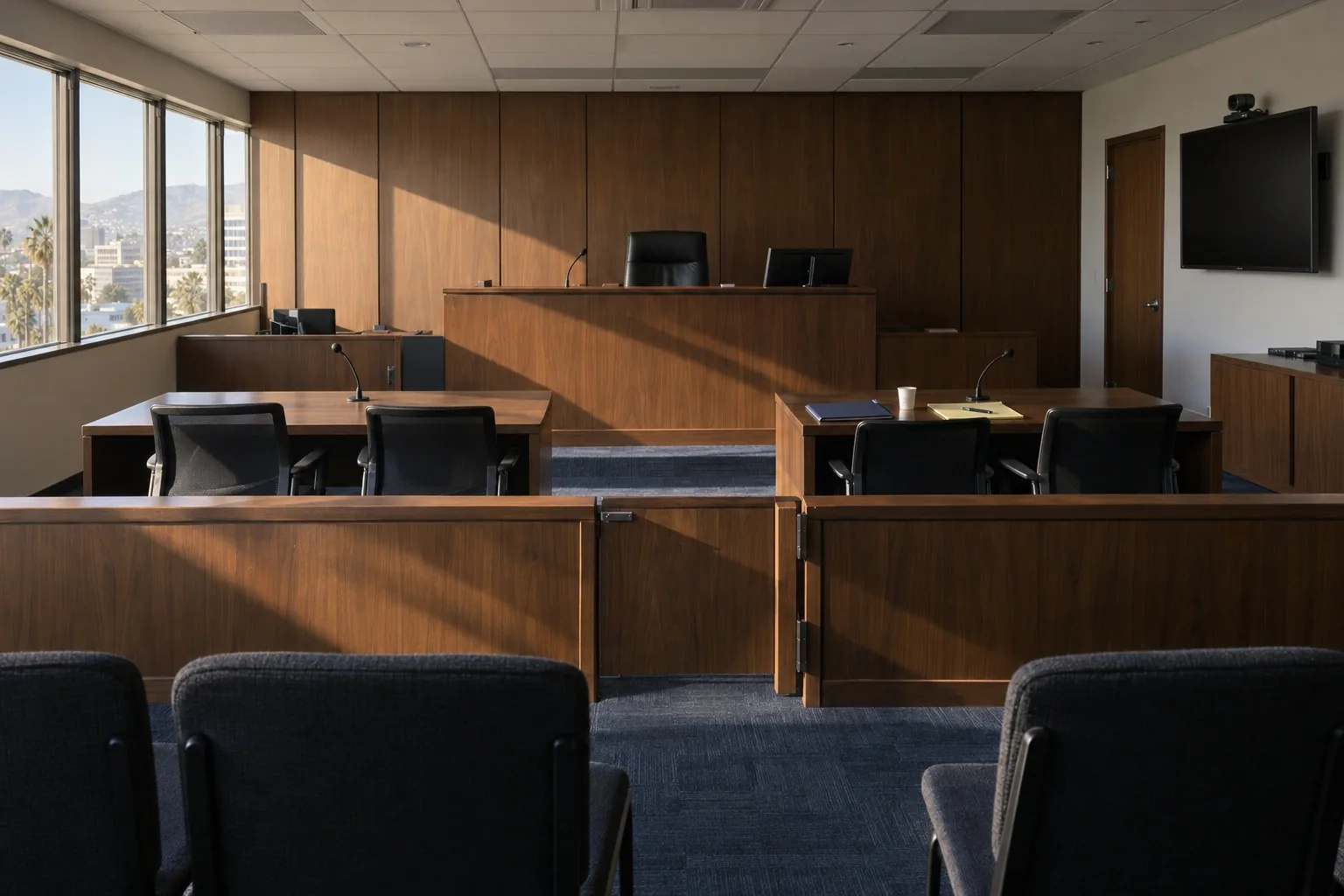








An immigration bond hearing is a short hearing where an immigration judge decides whether a person held by ICE can be released while their removal case continues, and on what bond. The minimum bond is $1,500 (INA § 236(a)(2)(A)), and there is no maximum. A hearing can often be scheduled within days to a few weeks of a request, but not everyone is eligible: people subject to mandatory detention, and others the government treats as “applicants for admission,” may be denied a bond hearing altogether.
What is an immigration bond hearing?
After an arrest, ICE first decides whether to hold the person or release them, sometimes on a bond ICE sets itself. The person can then ask an immigration judge to review that decision in a “custody redetermination” or bond hearing (8 C.F.R. §§ 1003.19, 1236.1(d)). The bond hearing is separate from the removal case: it decides only release, not whether the person can stay in the United States.
How fast can a bond hearing happen?
A bond hearing can be requested in writing, or orally at the first hearing, once the person is in ICE custody. Detained cases are scheduled on faster dockets than non-detained cases, and hearings are often set within days to a few weeks of the request. Timing depends on the court’s calendar and on how quickly evidence for the hearing can be gathered. Going in prepared usually matters more than going in first.
Who is eligible for a bond hearing?
- Generally eligible: people detained under INA § 236(a), the general detention provision for people arrested inside the United States while their case is decided.
- Mandatory detention: people covered by INA § 236(c), mainly because of certain criminal convictions or charges, cannot receive bond. The Laken Riley Act (2025) added people charged with, arrested for, or who admit certain offenses such as theft, burglary and shoplifting. A person can ask the judge to decide whether they are properly included in that category (Matter of Joseph, 22 I&N Dec. 799 (BIA 1999)).
- Arriving and recently entered people: people detained under INA § 235(b), such as those stopped at a port of entry, generally cannot receive a bond hearing (Jennings v. Rodriguez, 583 U.S. 281 (2018)), though ICE may grant parole.
In 2025 the Board of Immigration Appeals held, in Matter of Yajure Hurtado, that people who entered without inspection are detained as applicants for admission and are not eligible for bond before an immigration judge. Many federal district courts have disagreed in individual habeas cases, and the question is still being litigated. Whether a particular person can get a bond hearing, and whether a federal habeas petition is needed, should be reviewed with an attorney right away.
What does the judge consider?
The detained person must show that they are not a danger to people or property and not a flight risk (Matter of Guerra, 24 I&N Dec. 37 (BIA 2006)). Judges consider factors such as:
- a fixed address and how long the person has lived in the United States;
- family ties, especially U.S. citizen or permanent resident relatives;
- employment history and community ties;
- any criminal record, and immigration history including past missed hearings;
- whether the person has a form of relief to pursue in the removal case.
Useful evidence often includes identity documents, proof of address, letters from family, employers and community members, tax and work records, and proof of any pending application.
How much is an immigration bond?
The minimum is $1,500, and the judge sets the amount based on the facts. There is no maximum, and bonds of several thousand dollars or more are common. In the Ninth Circuit, which includes California, the Court of Appeals has held that the government must consider a detained person’s financial circumstances and alternative conditions of release when setting bond (Hernandez v. Sessions, 872 F.3d 976 (9th Cir. 2017)). The judge can also release a person on conditions, and ICE may add check-ins or electronic monitoring.
How is an immigration bond paid?
- Who can pay: the person who posts the bond, called the obligor, generally must be a U.S. citizen or lawful permanent resident with valid identification.
- Cash bond: the full amount is paid to ICE, at an ICE Enforcement and Removal Operations office or through ICE’s online bond payment system, using Form I-352. Check ICE’s current payment rules before going.
- Surety bond: a licensed bail bond company posts the bond for a fee, which is generally not refunded, and may require collateral.
A cash bond is generally refunded, with interest, to the obligor after the case ends if every condition was met, such as appearing at all hearings. If the person misses a hearing or an ICE appointment, the bond can be declared breached and the money lost.
What if bond is denied or set too high?
The bond decision can be appealed to the Board of Immigration Appeals within 30 days (8 C.F.R. §§ 1003.38(b), 1236.1(d)(3)). An appeal of a bond decision does not stop the removal case. A person can also ask for a new bond hearing if circumstances have materially changed since the last one (8 C.F.R. § 1003.19(e)).
How can Nassiripour Law Firm help with a bond hearing?
Nassiripour Law Firm provides attorney-led immigration representation, combining Ali R. Nassiripour’s legal experience and strategic oversight with the dedicated support of the firm’s paralegals and legal staff. Each case is approached with careful preparation, individualized legal analysis, and a commitment to protecting the client’s rights throughout the immigration process.
For a bond hearing, that typically means reviewing whether the person is eligible for bond, gathering evidence of ties and stability, requesting the hearing, presenting the case to the judge, and advising on payment and on the conditions that come with release.
Related: Family member detained by ICE · Deportation and removal defense · Notice to Appear · BIA appeals
How to reach Nassiripour Law Firm
Nassiripour Law Firm, 15615 Alton Parkway, Suite 450, Irvine, CA 92618. Phone (718) 916-4407, or use the contact form. Ali R. Nassiripour speaks English, Farsi and French. Staff also assist clients in Spanish, Hindi, Punjabi, Mandarin and Arabic.
Attorney advertising. This page is general information about U.S. immigration law, not legal advice, and the law in this area changes often. Reading it, or contacting the firm, does not create an attorney-client relationship. Every case depends on its own facts, and no outcome can be promised. Ali R. Nassiripour is licensed in New York; his practice is limited to federal immigration law.